Top 5 Trader Voice Vendor Risk Considerations

The Problem


How many CIO/CTO’s are personally involved in trader voice technology? I would submit the answer is very few, because if they were, it would be quite a different market. The trader voice market, specifically turrets and ringdown private wires, have been described by many as a melting ice cube. This is evidenced by the shrinking market share, price fluctuations, declining margins, vendor consolidation and abandonment, and a lack of competition in some regions.

The origins of trader voice can be traced to a wealthy financier putting in a private phone line to the New York Stock Exchange when phones were a hot new technology. Since then, the PSTN was deemed to be too slow, and subsequent rotary dial and touch tone innovations took too long. Speed dial resulted in a wait while the PBX dialed pulses and waited for the telephone circuit switches to complete the call, which could eventually result in a busy signal. Dealer Boards or Turrets were born, and with them ring down private lines/wires. We can debate the technically inaccurate abuse of the terms ‘hoot’ versus ‘shout down,’ and the need for an actual MRD in 2024, but they are still commonplace. Most enterprises today are looking to replace IP PBXs with cloud-based collaboration tools which do not speak to other collaboration vendors who do not provide an API that allows for a tight integration with a turret (i.e., common lamping, line sharing, barge-in and privacy etc.). While I would venture that if you took a turret having 40 years of features still in it (so a vendor can claim more than another) that traders use only a rely on a few. However, the ones they do use must be available in the next generation service.

We all know and manage the four major categories of risk which include strategic, compliance, financial and operational. Each has numerous additional nuances such as reputational, technical, internal, and external, among others. So, what are some of the risks that firms face with voice on the trading floor, and how do they mitigate them? This is a great deal of territory to cover in one sitting, so we will try to cover what are deemed some of the most pressing considerations.

Top 5 Risk Considerations

1. Corporate

-Is your vendor viable and stable?

-Will they remain in the trader voice business? For how long?

-Is their culture one of innovation, or do they to limit your options to maximize theirs?

-Why are some large players exiting the market?

-Are they breaking down or putting up barriers to compatibility and integration?

-Is their strategy helping you achieve yours, or is it making it more difficult?


2. Financial

-What are your vendors investing in R&D? (10-15% is the norm)

-Have they been laying people off, and closing offices and markets?

-What is their roadmap, and is it realistic and achievable?

-If they are private, have you asked for their financial status? Did they willingly provide it?

-Are their price increases justifiable and provide added value?


3. Technological

-Is their hardware an accessory or a major investment?

-Do they provide Cloud, Premises, and Hybrid options?

-Where are you in your evolution, and can they support your vision?

-Do their solutions fit your business plan, not stifle it?

-Is diversity, redundancy, and BCS/DR inherent in their offerings?

-Are EOL/EOS forcing a purchasing decision with them, or don’t they offer a migration?


4. Compliance & Ethics

-Do their solutions encourage bypass of regulations and compliance technologies?

-2024 year to date: $81+ million in fines for ‘off channel communications’

-Since 2021 nearly $2 billion in fines

-Recent fine of $350 million for violations from 2014 for ‘unspecified infractions’

-Are they offering you tools that either capture everything or integrate with other tools?

-Are they partnering, or forcing you to be the integrator?

-Is your staff writing RFPs for their vendor of choice and not your corporate strategy?

-Is your firm paying the high price for vendor gifting?

Security

-Do the underlying components the use guarantee that you have no vulnerabilities?

-Does AI put their solution at risk?

Is their architecture secure? How do you know? Did they provide or demonstrate their plans?

-Did you demand penetration and other testing results?


The Solution

Perhaps ‘the’ solution is a bit strong, as there is no silver bullet to solve all of the issues listed. However a possible solution is to find an answer that mitigates the risk, an allows you to retain and migrate at your own pace, not your vendors.’

One such alternative is XOP Networks. Vendors such as XOP can help you mitigate the vulnerabilities that some incumbent vendors face and add value at the same time. For example, some legacy conferencing systems depend on outdated OS and other vulnerable software components. They are not cloud ready (or even NEBS compliant) nor do they offer secure remote access, LDAP, or other common features. By replacing their core, you can achieve both with the XOP USN. It can also provide a universal, device independent UX, and do so cost effectively, while allowing you to retain your legacy CPE in most cases. They can literally bridge any protocol to any other and can offer a variety of codecs and recording interfaces. And if you require customization, they perform their own development and have a robust API.

Conclusion

There is so much more to discuss, in much greater detail than time and space will allow. The purpose of this blog was to encourage reflection on the market. The primary question that I have asked for many years is whether customers will drive innovation or continue to be passengers along for someone else’s guided tour?

For the last 20 years I have seen the largest and most powerful firms in the industry accept status quo from their vendors. There was a time when firms banded together as an industry purchasing juggernaut and held vendors accountable and demand action. They had legal representation from powerhouse industry attorneys and pooled the best tech talent to create to negotiate standards that benefited all. At some point, the vendors broke that bond to divide and conquer. Trades happen between firms. Creating a common standard, with an effective and efficient ecosystem to support that goal is in everyone’s best interest. Unlike disruptive startups, incumbent vendors have little incentive to offer innovation that would potentially reduce the revenue steam supporting their bloated operations, and service their excessive debt at your expense. At the very least, you should maintain a multi-vendor strategy to keep all players competitive. So, CIO/CTO, who is your alternative vendor and is it realistic or eyewash? Are you split 50/50 between them, or did your staff nominally meet a procurement requirement?

So, is the future that bleak? Hardly. Competition will eventually accomplish what cooperation has not. The right disruptive innovator will introduce the right technology and service bundle that cannot be ignored or mitigated by a slight billing change by a vendor that lacks an innovative response. When the ‘Gameboy Generation’ CIO’s fully engage the trading floor, uninfluenced by external incentives, they will address these risks and real change will finally occur.

Bill Wagner is a financial industry technology consultant with over 30 years’ experience as an industry executive in hardware, software, engineering, operations, R&D, product development and introduction, and strategic development.
Your Conference System is ‘End of _____.’ Now what?

The Problem

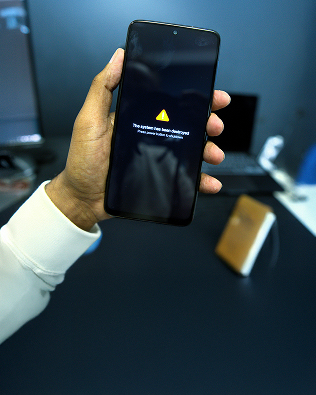
One of the many issues facing IT managers today is equipment that is End of Life, End of Sale, End of Support and Manufacturers Discontinued. Technologies rely on numerous underlying technologies, so at any given point a component of your system may be a risk to your enterprise. If your enterprise is a financial institution, then, to borrow a phrase, ‘Houston, we have a problem.’  What are your next steps?

1. Assess Your Risk

End of Life means no more updates, End of Sale means it is no longer available off the shelf, End of Support means if it is broken, you are on your own, and Manufacturers Discontinued means it is no longer available from the factory. While each is different, your problem is the same:  Risk! Why is it ending? Is there a particular component that is no longer available? One of the riskiest issues is when an underlying operating system is no longer supported.

-You are open to potential security risk that you literally cannot afford

-It may cause an operational risk in the form of service interruption

-A failure for any reason can cause reputational risk

-You may suffer financial risk from a failure either in fine or lost revenues


2. Determine Your Options

When this happens with the tech giant’s products (Windows XP, Mozilla Firefox, Adobe Flash, Java 6 Office 2003) there is usually something they have ready to replace it. But if your vendor was using one of those as an underlying foundational component, changing it may be incompatible with other components. Now you are faced with a decision you probably did not anticipate and may not have the budget to resolve. And that vendor who failed to plan has another answer? Is their promised fix six months to a year away? Do you want to be their first user guinea pig? Do you continue to trust a vendor who put you in this predicament? Do you dare go on the grey market for support, or parts of questionable quality on an auction website, or promises from the vendor to scour the warehouse or cannibalize systems for you? How would your choice look as a headline on tomorrow’s business news?

  • Scared yet? If not read on. In the financial industry the vendors who provide trader voice services are limited, and conference systems even more limited and due to its age it may have risk beyond ‘end of ____’:–Not SIP or WebRTC capable

-Not cloud ready or native

-Unable to convert all current protocols

-No secure remote/mobile access

–No LDAP integration

-No mobile apps

-No browser access form anywhere

-Out of date security and unable to upgrade

-Incompatible with your existing desktop appliances

3. Make a Decision

If the risk is low, you may be able to contain it and use something to front end it or replace it with a properly built CAPEX or OPEX solution from an experienced manufacturer and provider that has hundreds of thousands of ports operating around the world with zero down time.

  • Who is financially stable?
  • Who has the right vision?
  • Trader Voice has been dubbed a melting ice cube by some. Who will survive?
  • Who has a proven track record and base to support their sustainability?
  • Who ticks the boxes for integrating every past, present and future functionality you require?
  • Who is responsive to their all their customers’ needs, not just the top 20%?

In my experience, that vendor is XOP. Networks (www.xopnetworks.com). They come from the Telco background where failure is not acceptable, but have an agile mindset required for today’s tech success. Their modular design ensures that components can be upgraded or replaced without having to end them, and their track record proves it. And their model is not ‘one size fits all’ forcing you to buy more than you require.

Their Universal Services Node (USN) mitigates every risk mentioned and delivers every feature listed and more. And if it is not on the list, simply tell them what you need, and it will be developed by their team (as I have personally witnessed literally overnight). They support all protocols and can bridge the gap from anything to anything else. They can integrate to your system or provide an interface off the shelf. And they can extend the life of your technology investment and lower the risk that others foisted upon you.

XOP also supports Command and Control (C2) first responders, so they understand performance means lives and it is reflected in their products and services. They have long supported the financial industry where they also know that time is money. Depending on your service provider choice, you may be using them right now and not know it. Just ask yourself if your service has ever gone down, or if you had an ‘end of ____’ notice. If the answer is yes, your provider is not using XOP.


Conclusion

Sadly, firms can be misled by the sleight of hand performed by the very vendors who put them at risk. The promise of a new and improved widget or a glitzy demo can obscure the fact that there is a risk to their firm. After these notices are sent, IT Managers are forced to find and evaluate alternatives and expend resources on bids to replace them. If this blog resonates with your experience, then give XOP a call and save yourself time, aggravation, and cost. In closing I will remind you of the fable of the scorpion and the frog. The scorpion needs to cross the river and asked the frog for a ride on its back. To summarize, the scorpion bites the frog, and both drown in the middle of the river. The frog cried ‘why’? The scorpion responded, ‘because it is my nature.’ Choose wisely.


Bill Wagner is a financial industry technology consultant with over 30 years’ experience as an industry executive in hardware, software, engineering, operations, R&D, product development and introduction, and strategic development.
Preparing Your Home Office for Optimum Voice Quality

The Problem

Despite the exhortations of celebrity CEO’s, remote work is here to stay. We as IT leaders must determine how best to achieve our goals in this paradigm. Even before the pandemic, conferences and remote users have had their share of technical issues. Now collaboration systems’ disparities exacerbate the challenges. Audio quality is one of many such problems. Whether it is delay, echo, jitter, low bandwidth, poor equipment, background noise, or other factors, some simple actions can make your remote work environment sound more professional. If your teenage gamer were speaking in a Discord server chat and exhibited such poor audio, they would be kicked out or muted by the moderator. They may not fully understand why their peers use a particular vendor or technology, but they do heed the trend. So why does their parent, working for a prestigious employer, use a $20 headset in their home office and place transactions, and your firm at risk?


Many years ago, a customer had a small trading floor where a single trader had ‘static’ on all his lines. It was odd that only one person experienced this, and odder still that the lines were IP, and the problem was intermittent. I joined the tech on the service call at 7AM on a Summer morning before trading began. The trading turrets were older vintage, but in good working order. There was nothing remarkable about that desk. We tested both handsets and several lines with no issues. We checked for all the usual IP related issues like jitter. Nothing. We put it on speaker and checked the gooseneck microphone.  Suddenly there was the static. What we found was an extremely sensitive omnidirectional microphone with no windscreen which was aimed upward directly at the overhead air conditioning vent. I blocked the air with my hand and the static ceased. The telecom manager (remember those?) was highly embarrassed. While not a remote work example, it illustrates the point that even on a main trading floor, you can encounter unique circumstances. If you have such issues in the controlled environment of a main trading floor, imagine the issues you would encounter in the hundreds of uncontrolled remote work environments?


What Employees Can Do

-Correctly prepare your environment:

-Do not use rooms with vaulted ceilings, wood floors, and vast open space

-Use acoustic dampening panels when there is a chance for reflection

-Choose a room with a door to close if others are home

-Close windows

-Do not have fans or air vents blow on your desk

-Provide sufficient bandwidth:

-Dedicated if possible

-Use a cable not Wi-Fi or Bluetooth for all connections when possible

-Ear buds are EXTREMELY sensitive and pick up every noise so avoid them

-Choose the best SSID connection to your home router

-Use a VPN

-Test your up/down bandwidth with a speed test provider

-Correctly layout your desk

-Do not put the speakers and mic too close; angle the speakers towards you

-Use a headset if possible and do not put the mic boom too close to your mouth

-Do not put anything in front of you speakers and mic to impede their quality

-Turn off other mics not in use such as camera mics that can cause feedback

-Use the mute button judiciously

What Employers Can Do

-Provide quality equipment:

-Simply providing a stipend does not mean employees will spend it correctly

-Name the high-quality brands and exact model numbers of I/O devices

-Choose the correct microphone polar pattern for the environment:

-Cardioid (NOT omnidirectional)

-Ensure it has a foam windscreen cover

-Position the Speakers in the rear dead zone of the mic’s polar pattern

-Provide a home office best practices manual

-Test and monitor home offices as if it were a corporate site

-Provide up to date PCs:

-Provide a dedicated device if your other tools are processor hogs

-Traders have less screens when remote but want the same apps

-Is the OS, processor, drivers, settings, and memory up to the task?

-Check users Task Manger for utilization and performance and turn unnecessary items off

-Enable noise reduction on the PC, APP, and equipment

-For WebRTC apps, are browser extension disabled?

-Is security software slowing things down?

What Technology Vendors Can Do

-Provide best practices recommendations for remote use of your products

-Do not sell less than what your customer needs just to get the deal:

-Make sure your remote desktop vendor manages voice correctly

-Procure all the required software packages

-Provide tools that clean up inferior quality audio or noise even if it is introduced:

-AI can do easily determine that a barking dog does not belong on a call

-Provide a platform such as XOP Networks that can solve this for you:

-Extend the life of your legacy assets

-Account for every user’s setup being potentially different

-Provide protocol conversion and bridging when necessary

-Provides multiple access methods to suit your situation or as a backup

-Reestablish connections upon failure for business continuity and reduced interruption

-Normalize access methods to provide a common user experience

-Allow a single pane of glass for administrators ease of management

Conclusion

Is all this obvious? Remember the example of my visit to the trading floor for static? For the want of a foam windscreen, or moving the trader, they frustrated a key revenue producer, wasted their time and the vendor’s time. Do not skimp on remote worker costs as it is never worth the few pennies you may save. Listen to a voice recording of a poor-quality trader voice call and ask yourself if it would lend itself to the conflict resolution of a disputed trade. Why risk your reputation, and profits from that trade made on a $20 headset because a manager was more concerned about their budget? The Federal Reserve Banks use the fable, Shopping Wisely with Olivia Owl, to teach children the value of money. The moral is that if you compare price options before you shop, you will use your money more productively. As IT managers, we need to plan and choose vendor partners wisely, then test, monitor and maintain our remote workers’ equipment and applications the same as if they were in an office. If not, we risk being the telecom manager responsible for 100 angry traders under 100 air vents.


Bill Wagner is a financial industry technology consultant with over 30 years’ experience as an industry executive in hardware, software, engineering, operations, R&D, product development and introduction, and strategic development.
XOP Networks adds support for G.722 codec to its Hoot and Holler Conference Bridge

XOP Networks Hoot Conference Bridges now support the G.722 codec which provides high-quality audio, making it preferred for Trader Voice networks.


DALLAS, TEXAS, USA, October 28, 2023 /EINPresswire.com/ — XOP Networks, a leading provider of advanced communication solutions, has its Hoot Conferencing equipment deployed in Trader Voice financial services networks worldwide. The G.722 codec provides high-quality audio, making it preferred for applications where clear speech transmission is crucial. XOP Networks now offers support for the G.722 Codec in its “always on” SIP/VoIP based Hoot Conferencing equipment, thereby enabling very high-quality speech communication among traders that participate in Hoot conferences.

– Key attributes of our G.722 based conferencing include:
– Better Speech Quality: Operates at a sampling rate of 16 kHz, which is twice the rate of the traditional telephone system (8 kHz). This higher sampling rate supplies dramatically improved audio quality for more accurate trader communication.
– Excellent Bit Rate: Uses compressed bit rates of 64, 56, 48 Kbits/s., where 64 Kbps is most used. Thus, the bandwidth requirement for voice transmission is similar to G.711.
-Compatibility: Interoperable with variety of Turrets and Trader Voice switching systems and PBXs that support G.722.
-Flexibility: Both G.711 and G.722 calls are allowed in the same Hoot room.“The adoption of G.722 codec in our solution reflects our commitment to continuously improving our products and bring the latest technology to our Trader Voice customers”, said John D’Annunzio, Vice President of Sales, XOP Networks, Inc.


“A large number of our SIP based Hoot bridges are deployed in Trader Voice networks worldwide. With support for both G.711 and G.722 codecs, our Private Wire customers can offer significantly richer audio experience to their end users”, said Sudhir Gupta, CEO of XOP Networks Inc.

John D’Annunzio
XOP Networks, Inc
+1 972-590-0200
email us here
Visit us on social media:
LinkedIn

XOP Networks Provides Hoot and Holler Service to Companies Impacted by Expansion Changes With Current Providers

XOP Networks is pleased to announce the availability of its IP Based Hoot and Holler service.

Traditional Hoot-and-holler service allows participants to get on an ongoing audio conference by simply lifting their phone’s handset. Such services are delivered by telecommunication service providers using 4 wire leased line circuits that terminate onto purpose-built hoot phones.

With recent announcements about prominent and large service providers no longer allowing expansions to their current clients, XOP Networks is now offering an equivalent IP based Hoot and Holler service to all impacted businesses.

This new service is designed to fill the gap created by disinterested service providers. Businesses impacted by lack of interest from large service providers can now sign up for IP based Hoot and Holler service offered by XOP Networks.

The new service is offered by deploying XOP Networks’ Universal Services Node – a state of the art SIP based audio conference bridge in a hosted environment and works in conjunction with XOP Networks’ specialized Hoot and Holler IP phones.

“We are pleased to be able to offer a replacement Hoot and Holler service to companies, such as auto parts traders, utility companies etc., that need a viable Hoot and Holler service to keep their businesses running. With the XOP Networks’ IP based conferencing platform we can offer a modern high-quality service which has excellent audio experience and superior up time,” said Sudhir Gupta, CEO of XOP Networks.

About XOP Networks

Headquartered in Dallas, Texas, XOP Networks, Inc was founded in January 2003 and is backed by a seasoned management team. Deployed at multiple Cellular Operators, Fortune 100 companies, CLEC/IOC customers, Government organizations, DOD networks (Air Force, Army and Navy) XOP Networks’ products allow customers to boost employee productivity, increase business efficiency and enhance emergency communications. Having both TDM and VoIP interfaces, XOP products allow customers to seamlessly transition their Value-Added Services from legacy circuit switched networks to VoIP based packet switched networks.

Looking for Sycamore’s SPS-1000 Replacement – XOP Networks has the Answer

XOP Networks, Inc., a manufacturer of TDM and VoIP based audio conference bridges announces availability of a replacement system for Sycamore/Coriant’s manufacturing discontinued Signal Processing System (SPS) 1000. The SPS-1000 is widely deployed in the financial services Trader Voice, Commodity brokerage, Utility and Transportation industries.

The XOP Networks Universal Services Node platform matches and/or exceeds the functionality provided by the SPS-1000. Notable features include support for:

  • CAS T1 and E1 interfaces
  • Automatic and Manual Ring Downs (ARD/MRD)
  • Hoot-n-Holler conferences

In addition to the standard SPS-1000 functionality the USN can also offer

  • CAS DS3 and E3 interfaces
  • ARD/MRD and Hoot capability over SIP/VoIP trunks

This allows Private Wire service providers to consolidate multiple SPS-1000s into one USN and offer interworking between TDM based turrets (e.g., IPC’s Alliance MX) and VoIP based turrets (e.g., SpeakerBus iTurret).

XOP Networks has extensive financial services industry experience having deployed tens of thousands of ARD, MRD and Hoot-n-Holler capable conferencing ports worldwide. (Click here to see the IPC press release).

“We are proud to be able to offer a drop-in replacement for SPS-1000 to the financial services’ Trader Voice, Commodity trading, Power Utilities and Transportation industries. The companies that are looking for expansion or replacement for their manufacturing discontinued Sycamore/Coriant SPS-1000 now have a choice – a modern, TDM and SIP/VoIP capable, feature rich, highly secure XOP Networks’ USN,” said Sudhir Gupta, CEO of XOP Networks.

About XOP Networks

Headquartered in Dallas, Texas, XOP Networks was founded in January 2003 and is backed by a seasoned management team. Deployed at multiple Cellular Operators, Fortune 100 companies, CLEC/IOC customers, Government organizations, DOD networks (Air Force, Army and Navy) XOP Networks’ products allow customers to boost employee productivity, increase business efficiency and enhance emergency communications. Having both TDM and VoIP interfaces, XOP products allow customers to seamlessly transition their value added services from legacy circuit switched networks to VoIP based packet switched networks.

For more information about XOP Networks, visit its website at https://www.xopnetworks.com.

XOP Networks’ Universal Service Node is the Answer to Avaya Meeting Exchange

XOP Networks’ Universal Service Node (USN) conference bridge is the right answer for replacing Avaya Meeting Exchange (MX) conference bridge.

Avaya recently announced that it will be discontinuing its Avaya MX Conference Bridge platform.

XOP Networks’ Universal Service Node (USN) is a widely deployed conferencing platform that offers Audio Conferencing, Web Conferencing, Video Conferencing, Hoot and Holler conferencing and Firebar conferencing applications. With it’s broad feature set and host of other capabilities it meets and exceeds capabilities available on the Avaya MX conference bridge.

Following are high level attributes of XOP Networks’ USN that make it a suitable alternative to the Avaya MX:

  • Highly Scalable – Up to 2000 ports under one management
  • Highly Available – Can be deployed with Active/Active and Active/Standby configurations
  • Avaya Emulation – Can mimic Avaya MX’s DTMF based controls so that end user experience is not impacted
  • Multiple Trunk types – Can support T1/E1 PRI, SIP and H.323 trunks or any combination on the same platform
  • Platform Independent – Can be deployed on physical servers or virtual servers
  • Platform Extensions – Support available for LDAP, SNMP, Enhanced Security, Bulk Provisioning, Multiple Languages etc.
  • API Support – Easy integration with third party network elements such as Provisioning Manager, Billing Manager etc.
  • Customer Support – Backed up by 24 x 7 global support

In addition, XOP Networks’ flexible product architecture allows us to quickly customize the product to suit a given customer’s environment.

All of these attributes make XOP Networks’ USN the ideal replacement for the Avaya Meeting Exchange. We have a number of USNs already deployed successfully with Avaya PBX’s and we look forward to helping other Meeting Exchange customers that wish to replace their platform.

“When we first learned that the Avaya Meeting Exchange was at the end of life, we analyzed the Meeting Exchange feature set and realized that our fully featured and economical Universal Service Node conference bridge would be an ideal replacement for it”, said Sudhir Gupta, CEO of XOP Networks.

About XOP Networks

Headquartered in Dallas, Texas, XOP Networks was founded in January 2003 and is backed by a seasoned management team. Deployed at multiple Cellular Operators, Fortune 100 companies, CLEC/IOC customers, Government organizations, DOD networks (Air Force, Army and Navy) XOP Networks’ products allow customers to boost employee productivity, increase business efficiency and enhance emergency communications. Having both TDM and VoIP interfaces, XOP products allow customers to seamlessly transition their value added services from legacy circuit switched networks to VoIP based packet switched networks.

For more information about XOP Networks, visit its website at https://www.xopnetworks.com.

For more information please contact: Angie Bryant Director of Marketing XOP Networks Phone: 214-929-9462 Email: abryant@xopnetworks.com

XOP Networks Announces General Availability of Advanced Conferencing Software

XOP Networks, Inc., a manufacturer of widely deployed analog and SIP based conference bridges, announces the latest release for it’s Universal Services Node (USN) and Digital Collaboration Bridge (DCB) platforms. The Release 9 is the most advanced and feature rich release in XOP’s history.

The Release 9 adds the following platform extensions:

WebRTC based Web Collaboration – Allows participants to virtually meet over the Internet. They are able to see each other, hear each other, share content, all from a web browser without downloading any application software.

Remote Control – A user can take control of a far end PC which makes it ideal for remote support etc.

Click to Call – Allows a participant to enter an audio conference simply by clicking on a browser link thus avoiding any dial up charges.

R9 adds following Platform Extensions:

XOP Application Programming Interface (API) – Allows external sub-systems to query the health of the USN, bulk provision Moderator accounts & configure conference rooms etc.

SNMP Enhancements – Supports proprietary MIB, SNMP V3

“I am excited to announce the most significant software release that XOP Networks has ever launched. In line with USN’s multi-application philosophy, it adds exciting new capabilities such as WebRTC based Web Collaboration, Browser based Click to Call and Remote Control. We believe R9 enhances our leadership position in providing comprehensive and user-friendly conferencing platforms,” said Sudhir Gupta, CEO of XOP Networks.

About XOP Networks

Headquartered in Dallas, Texas, XOP Networks was founded in January 2003 and is backed by a seasoned management team. Deployed at multiple Cellular Operators, Fortune 100 companies, CLEC/IOC customers, Government organizations, DOD networks (Air Force, Army and Navy) XOP Networks’ products allow customers to boost employee productivity, increase business efficiency and enhance emergency communications. Having both TDM and VoIP interfaces, XOP products allow customers to seamlessly transition their value added services from legacy circuit switched networks to VoIP based packet switched networks.

XOP Networks Continues to Deliver Cloud based Hotline Service to Auto Dismantlers & Auto Part Recyclers

XOP Networks’ issued a press release in May of 2019 announcing availability and continued success of its IP based Hoot and Holler service, also called ‘Hotline’ service by auto dis-mantlers and re-cyclers.

The prior Press Release seen here shared some of our early success with the service including a testimonial from CEO Jorge Lopez of B-J Used Auto Parts and Dismantler, Inc.

This IP based Hotline service makes use of XOP Networks’s hosted audio conference bridge. The IP terminals automatically register with the conference bridge as soon as they are powered up and connected to a given location’s Internet. This plug and play approach allows auto parts dis-mantlers and re-cyclers to seamlessly switch over to XOP’s new hotline service at their own pace. The continued success, with plug and play installation only taking a few minutes, is allowing more companies to add new members to their hotlines and thus making their hotline itself more productive.

“The auto dis-mantlers and re-cyclers use the Hotline service to buy and sell used auto parts. Earlier these companies were dependent on large carriers providing them the hotline service using 4 wire leased lines. Needless to say that is an expensive solution and not very well supported by large carriers. Compared to that the XOP Hotline solution is a welcome breeze”, said Sudhir Gupta, CEO of XOP Networks.

About XOP Networks Headquartered in Dallas, Texas, XOP Networks was founded in January 2003 and is backed by a seasoned management team. Deployed at multiple Cellular Operators, Fortune 100 companies, CLEC/IOC customers, Government organizations, DOD networks (Air Force, Army and Navy) XOP Networks’ products allow customers to boost employee productivity, increase business efficiency and enhance emergency communications. Having both TDM and VoIP interfaces, XOP products allow customers to seamlessly transition their Value-Added Services from legacy circuit switched networks to VoIP based packet switched networks.

For more information about XOP Networks, visit its website at https://www.xopnetworks.com For more information please contact: Angie Bryant Director of Marketing XOP Networks, Inc Phone: 214-929-9462 Email: abryant@xopnetworks.com

XOP Networks Offers Conference System Lease Program to Assist Companies Coping with Employees Working from Home Challenge

In response to unprecedented need for employees to work from home, XOP Networks, a developer of Audio Conference and Web Collaboration bridges announces a conference bridge lease program.

As part of this program, XOP Networks will:

  •     Will load latest conferencing software on a customer owned physical or virtual server.
  •     Enable conference bridges that scale from 24 ports to 1000 ports
  •     Lease software in 3-month increments
  •     Allow 90% of the amount spent on lease towards an equipment purchase if the customer desires to do so at a later date

Our latest software release offers following advanced features for further facilitating work from home:

  •     Join the Audio Conference using computer audio or dial in via PSTN
  •     Share webcams for Video Conferencing
  •     Share desktop or specific application (Word, Excel etc.)
  •     Share a whiteboard for brain-storming etc.
  •     Use webinar for training, product demonstrations
  •     Optimize bandwidth utilization
  •     Bulk provision Moderator accounts and conferences quickly using our REST API

“We are pleased that we are able to help companies meet their employees’ needs for being able to work from home. We can have our conference bridge installed and working on a customer’s server in an hour or less”, said Sudhir Gupta, CEO of XOP Networks.

To take advantage of this offer call us at 972-590-0201 or email us at sales@xopnetworks.com.

About XOP Networks

Headquartered in Dallas, Texas, XOP Networks was founded in January 2003 and is backed by a seasoned management team. Deployed at multiple Cellular Operators, Fortune 100 companies, CLEC/IOC customers, Government organizations, DOD networks (Air Force, Army and Navy) XOP Networks’ products allow customers to boost employee productivity, increase business efficiency and enhance emergency communications. Having both TDM and VoIP interfaces, XOP products allow customers to seamlessly transition their Value-Added Services from legacy circuit switched networks to VoIP based packet switched networks.

For more information about XOP Networks, visit its website at https://www.xopnetworks.com.